
TL;DR
Narcan is a brand name for naloxone, a medicine that pushes opioids off the brain receptors that slow breathing. It can restore breathing in a person who is overdosing.
Narcan works on fentanyl, but fentanyl is so strong that one dose is sometimes not enough. A second dose is common.
Narcan wears off faster than many opioids. The person can stop breathing again, so you must call 911 even if they wake up.
Narcan will not harm someone who has no opioids in their system. If you are unsure, give it.
Surviving an overdose is a moment when treatment is often possible. Medical detox is the safest first step.
Table of Contents
What is Narcan? Understanding naloxone and opioid overdose reversal
How does Narcan work? Blocking opioid receptors in the brain
What happens in the body in the first minutes after Narcan is given
After the overdose: treatment and detox support at Laguna View Detox
Introduction
If someone you love uses opioids, you may have wondered what you would do if you found them blue-lipped and unresponsive. What is Narcan, and could a small nasal spray really bring someone back? It can. But it works in a specific way, on a specific clock, and knowing both could change how you act.
This article explains what Narcan is, how it works inside the body, what you will see in the first minutes after a dose, and what has to happen next. We are a detox center, and we meet people after overdoses every month. What follows is what we would tell your family across a kitchen table.
What is Narcan? Understanding naloxone and opioid overdose reversal
Narcan is a brand name. The medicine inside is naloxone. Naloxone is not a drug of abuse, it has no high, and it does nothing useful for someone who has not taken an opioid. Its one job is to reverse the effects of opioids, including prescription pain medicines, heroin, and fentanyl.
Opioids are a class of drugs that includes prescription medicines such as morphine and illegal drugs like heroin.[1] In an overdose, the danger is that breathing slows or stops. Naloxone is aimed at that problem.
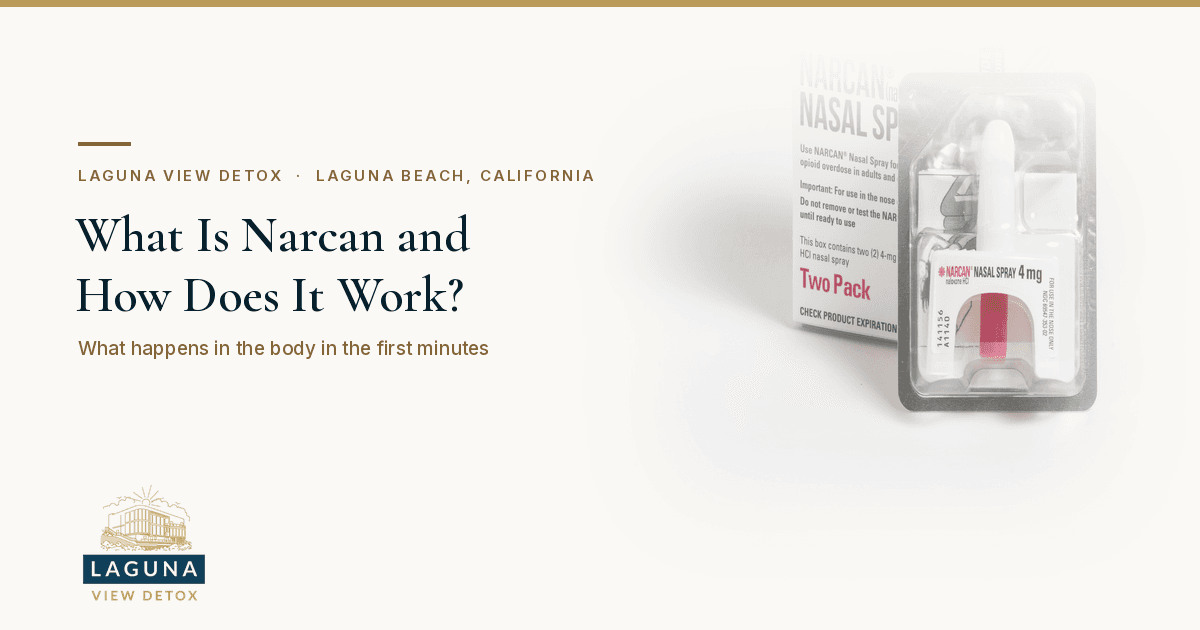
Narcan most often comes as a nasal spray. You do not need medical training to use it, and you do not need to inject anything.

How does Narcan work? Blocking opioid receptors in the brain
Opioids work by attaching to opioid receptors, which are docking points on nerve cells in the brain and body. When enough opioid is attached, pain eases and a person feels calm. Too much, and the part of the brain that drives breathing goes quiet.
Naloxone binds to those same receptors more tightly than most opioids do. It knocks the opioid off and sits in its place without activating the receptor. Think of a key that fits the lock perfectly but cannot turn it. The opioid is still in the body, but it is shut out of the receptors for a while.
That is why naloxone is called an opioid antagonist. It blocks. It does not remove the opioid or treat the addiction underneath.

What happens in the body in the first minutes after Narcan is given
The nasal spray is absorbed through the lining of the nose and reaches the bloodstream within minutes. Once naloxone reaches the brain, breathing can return fairly quickly. Here is a general timeline. Every overdose is different, and these times are approximate.

Time after the dose | What may happen | What you should do |
|---|---|---|
0 to 2 minutes | Naloxone is absorbed. The person may still look unresponsive. | Keep calling their name. Stay with them. Make sure 911 has been called. |
2 to 3 minutes | Breathing may deepen. Skin color may start to improve. | If there is no response, give a second dose in the other nostril. |
3 to 5 minutes | The person may wake, cough, or gasp. Some wake confused or upset. | Lay them on their side. Tell them calmly what happened. |
Next 30 to 90 minutes | Naloxone starts to wear off. Opioids can reattach. | Do not leave. Watch the breathing until help arrives. |
Waking up can be rough. Because naloxone strips opioids from the receptors all at once, a person who is physically dependent can go into sudden withdrawal. Expect sweating, shaking, nausea, vomiting, goosebumps, anger, or fear. It is miserable, but it is not usually dangerous in itself. Be gentle, and ask them not to use again right away, because more opioid can cause a second overdose once the naloxone fades.
Does Narcan work on fentanyl and other synthetic opioids?
Yes, it does. But fentanyl changes the odds, so the answer needs some care.
Fentanyl is a synthetic opioid, made entirely in laboratories. It is much more powerful than morphine or heroin, and its effects can start more quickly.[1] Even a small amount can cause a fatal overdose, including when a person takes it without knowing it was added to counterfeit pills or other illegal drugs.[1]
With that much opioid on the receptors, one dose of naloxone sometimes cannot clear enough of them. This is why a second dose after two to three minutes is common advice, and why we want a person watched until medics arrive. For a deeper look at fentanyl itself, read our guide on what fentanyl is and its overdose symptoms.
Narcan works on fentanyl, heroin, oxycodone, hydrocodone, and morphine.
It does not reverse sedatives like alcohol or benzodiazepines on their own.
When several drugs are involved, Narcan can restore breathing from the opioid part, but the person still needs emergency care.

Why you must still call 911 after giving Narcan
Narcan can wear off before the opioid does. Naloxone lasts a shorter time in the body than many opioids, and fentanyl can linger. A person who woke up at minute four can stop breathing again at minute forty.
Emergency responders can give more naloxone, support breathing with oxygen, and check for other drugs or injuries. Call 911 first if you can, or have someone else call while you give the spray. Stay until help arrives.
In the United States, the SAMHSA Treatment Locator and the line 1-800-662-HELP (4357) can also connect people to treatment after an emergency.[2]

How to recognize an overdose and use Narcan nasal spray
Signs of an opioid overdose include:
The person cannot be woken, even by shouting or rubbing the breastbone.
Breathing is very slow, noisy (snoring or gurgling), or has stopped.
Lips and fingertips look blue, purple, or gray.
Pupils are very small.
The body is limp.
If you are not sure whether it is an overdose, treat it as one. Narcan will not hurt a person who has no opioids in their system.
Steps for the nasal spray:
Call 911.
Lay the person on their back and tilt the head back slightly.
Peel back the package. Hold the device with your thumb on the plunger and two fingers on either side of the nozzle.
Place the tip in one nostril until your fingers touch the nose. Press the plunger firmly.
Roll the person onto their side. If they are not breathing well, start rescue breathing or chest compressions if you are trained.
After two to three minutes with no response, use a new device in the other nostril.
Keep Narcan where you can find it fast, and tell the people in your home where it is. Many pharmacies in California can provide it without a prescription.
After the overdose: treatment and detox support at Laguna View Detox
Narcan reverses an overdose. It does not treat opioid use disorder. The days and weeks after a reversal are a risk period, and also a real opening. Many people are frightened and willing to talk.
Opioids change brain activity in ways that make people keep using even when they see the harm.[1] That is not a character flaw. It is a medical condition, and medicine can help. NIDA describes medications for opioid use disorder as safe, effective, and life-saving.[2]
At Laguna View Detox, medical detox lets a person get through opioid withdrawal with clinical monitoring and symptom relief. From there, residential inpatient care offers a structured place to stabilize. If anxiety, depression, or trauma sit underneath the use, our dual diagnosis program treats both together. Addiction therapies and aftercare and alumni support continue the work after discharge.
Treatment planning follows frameworks such as The ASAM Criteria, which uses a person-centered approach to build care plans for addiction and co-occurring conditions.[3] If you are weighing options, our guide on how to choose a detox center and our look at common myths about drug detox may help.
Frequently Asked Questions
Q: What is Narcan and is it the same thing as naloxone?
A: Narcan is a brand name for naloxone, the medicine that reverses opioid overdoses. Naloxone is also sold under other names and in injectable forms. The active drug is the same.
Q: How does Narcan work to reverse an opioid overdose?
A: Naloxone attaches to opioid receptors more tightly than most opioids and displaces them. That blocks the opioid's effect on the brain's breathing center, which allows breathing to return. It does not remove the opioid from the body.
Q: Does Narcan work on fentanyl, and why might more than one dose be needed?
A: Yes. Fentanyl is far more potent than morphine or heroin,[1] so a lot of it may be sitting on the receptors. One dose may not clear enough, and fentanyl can outlast the naloxone. If there is no response after two to three minutes, give another dose and keep waiting for medics.
Q: How long does it take for Narcan to start working, and how long do its effects last?
A: Many people respond within two to five minutes. The effect usually lasts roughly 30 to 90 minutes, which can be shorter than the opioid itself. That is why a person must be watched and taken for emergency care even after waking.
Q: Can Narcan hurt someone if they are not actually overdosing, and what are the side effects such as withdrawal symptoms?
A: Narcan has no effect on a person with no opioids in their body, so it is safe to give when you are unsure. In someone who is dependent on opioids, it can trigger sudden withdrawal: sweating, shaking, nausea, vomiting, agitation, and a racing heart. These are very uncomfortable but usually pass as the naloxone wears off. Supervised medical detox is a safer way to go through withdrawal.
Conclusion
Narcan is naloxone, a medicine that blocks opioids at the receptor and can start a person breathing again within minutes. It works on fentanyl, though a second dose is sometimes needed. It wears off, so 911 is always part of the answer. Keep a kit within reach, and tell the people around you where it is.
If an overdose has already happened to you or someone you love, that is a moment to act on. Laguna View Detox can help you start with medical detox and plan what comes after. Visit lagunaviewdetox.com or call us today.
References
National Institute on Drug Abuse. Fentanyl. - https://nida.nih.gov/research-topics/fentanyl
National Institute on Drug Abuse. NIDA.NIH.GOV. - https://nida.nih.gov
American Society of Addiction Medicine. ASAM - American Society of Addiction Medicine. - https://www.asam.org